jaguar


Nestled amongst pine clad hills, Spa is one of the oldest and most legendary of the Formula 1 circuits. They started racing here 100 years ago as a novel alternative to the then popular city to city races. The current circuit is often mentioned by Formula 1 drivers as their favourite and the plunge downhill to Eau Rouge before the climb up to Les Combes is regarded as one of the most perfect racing corners in the world. I have never driven the current circuit but doing so is certainly on my bucket list.

I was last at Spa for the Belgian GP in 1998. The weather was unusually fine but the race was dull. Schumacher and Ferrari were in their pomp and pretty soon the race began to resemble the sort of dull processions that did so much to turn off fans in the Schumacher era. Even sitting at the bottom of Eau Rouge could not make things more interesting and that race was the last F1 race I went to for 12 years.

The Spa circuit we see today is only a fraction of the Spa circuit that was in use from 1902 until 1978. That circuit was much much longer at 15km in length and had a reputation for appalling weather and danger as notorious as that of its near neighbour across the German border, the Nurburgring.

The typically wet weather, the lack of run off and the brooding trees claimed many lives, even before the War. Dick Seaman was killed here in his works Mercedes on 1939. Throughout the fifties and sixties lap times shortened as cars got quicker. Inevitably the danger increased. For example the 1960 GP claimed two British drivers, Chris Bristow and Alan Stacey. Stirling Moss was also injured.

The weather for the 1966 race was awful and Jackie Stewart had a serious accident he was lucky to survive. Having crashed on a remote part of the track he had to rely on fellow competitor Graham Hill to pull him from his car. Jackie has often said that it was this accident that started his campaign for better safety in Formula 1.

Those running Spa made little effort to make the circuit safer and F1 ceased to race on the old circuit in 1970. Sports car racing continued, lap times got quicker still and the death toll mounted. Three drivers died in the 1973 Spa 1000km race. The lap record (that still stands) was set in that era by Pedro Rodriguez in a Porsche 917 at an incredible average speed of over 150 mph.

Finally, in 1978 the old circuit was closed and reconfigured. It was reopened in the shorter form we see today and GP racing returned in 1983. The public roads that bore the old circuit reverted to full time public highways and can be driven today.

You join the old circuit at Les Combes and meander slowly down hill through the village of Burneville. It’s pretty straight and an F1 car would be going very fast as you enter the long right hander at the bottom of the hill. Houses and junctions keep your speed down and it is hard to believe you are on such a notorious circuit.

The long straight between Malmedy and Stavelot is interrupted by the infamous Masta Kink. It’s been tightened in modern times but its old configuration can be seen in the lay – by that sits where the wicked left / right must have terrified drivers in the past. Motorsport’s famous correspondent Dennis Jenkinson used to sit above the Kink and watch and listen to the passing racers to see who could take the Kink flat out and who would lift off. To him it was the ultimate test of a driver.

Just before Stavelot a cambered right hander takes the old circuit back towards Blanchimont and the new circuit. The crumbling Tarmac and flaking Armco at the beginning of this stretch are from the original circuit. Finally, with little traffic and few houses, it is possible to open up the throttle a bit. The road is very straight and its easy to see why the old circuit was so fast. Pretty soon you arrive at some huge gates that mark the point the old circuit joins the new, but for at least a few seconds its possible to imagine how Fangio, Moss, Stewart and Rodriguez must have felt all those years ago.

Below: Masta Kink isn’t what it used to be; Blanchimont gates; Rodriguez’s Porsche 917

20130310-084807.jpg

20130310-084826.jpg

20130310-084840.jpg

Yesterday I started my European road trip with a dawn start and the Eurotunnel to Calais. The service is so quick, convenient and reliable I don’t know why anyone takes the ferry.

I was in Calais by 9am and through the grim Pas de Calais (all pylons and crumbling Autoroute) within half an hour. Crossing the border into Flanders the quality of the road improved and whilst the countryside was still flat it looked more prosperous. The Jaguar XKR performed faultlessly, cruising at the speed limit effortlessly, unchallenged by all but the odd Audi. Audi seems to be the brand favoured by plutocratic Belgians. It is rare to see BMWs or Merc’s let alone another Jag. What I did see a lot of in both Belgium and France were all sorts of Dacia, Europe’s newest austerity motor. Their success must, to some degree, have come at the expense of parent company Renault. I wonder what soon to be made redundant French Reggie workers feel about being displaced by their more cost effective Romanian colleagues?

Three hours after leaving Calais I had passed South of Ghent, round Brussels and north of Liege, crossed the mighty Meuse and started the climb through the pine forests of the Ardennes to that most celebrated of race circuits, Spa.

Earlier this week I was invited to one of the London launches of the new Jaguar F Type sportscar. It’s hard to underestimate the importance of the F Type to Jaguar who have not produced a true sports car since they started sticking v12’s in the E type. The F Type is to be Jaguar’s Range Rover Evoque. A car intended to appeal to new audiences and sell well in the vital US market.

Ian Callum, Jaguar’s brilliant designer, was at the launch along with Jaguar’s marketing director. I remember speaking enthusiastically about my XKR to Callum at an RAC dinner a few years ago. He said he was glad I liked it but told me how disappointed he was that it did not sell so well. I suspect the problem is that the thirty and forty something men the car is aimed at prefer a sports car to a GT. And whilst they have had a lot of alternatives from which to chose, the sportscar market is dominated by Porsche. Last year they sold more 911’s alone than Jaguar sold of all models. For these typical customers a credible Jaguar sports car will need to compete with the 911 and also, crucially, the Boxster and Cayman. Is it, however, any coincidence that the press, busy testing the superb new Cayman, have not yet been allowed anything more than passenger rides in the F Type? Are Jaguar afraid of the comparisons that may be made with the F Type? A car that will cost more than the Boxster and Cayman equivalents?

At the launch the Jaguar staff circulating with the guests reiterated again and again the point that the F Type is a different proposition to the Boxster / Cayman. It’s a traditional British front engine rear wheel drive sports car. That may be so but will a buyer not steeped in Jaguar lore really want to buy a sports car that is dynamically leas accomplished and more expensive than the equivalent Porsche?

Much was made at the launch of the F type attracting new, younger customers to the brand. The evening started with clouds of dry ice, a hip female DJ playing cool contemporary club classics and a moody video of Lana Del Ray warbling through a lacklustre song “inspired” by the F Type. Despite this the majority of those attending were older than me, and I’m well into my forties. It seems Jaguar need to do a bit more to widen their demographic.

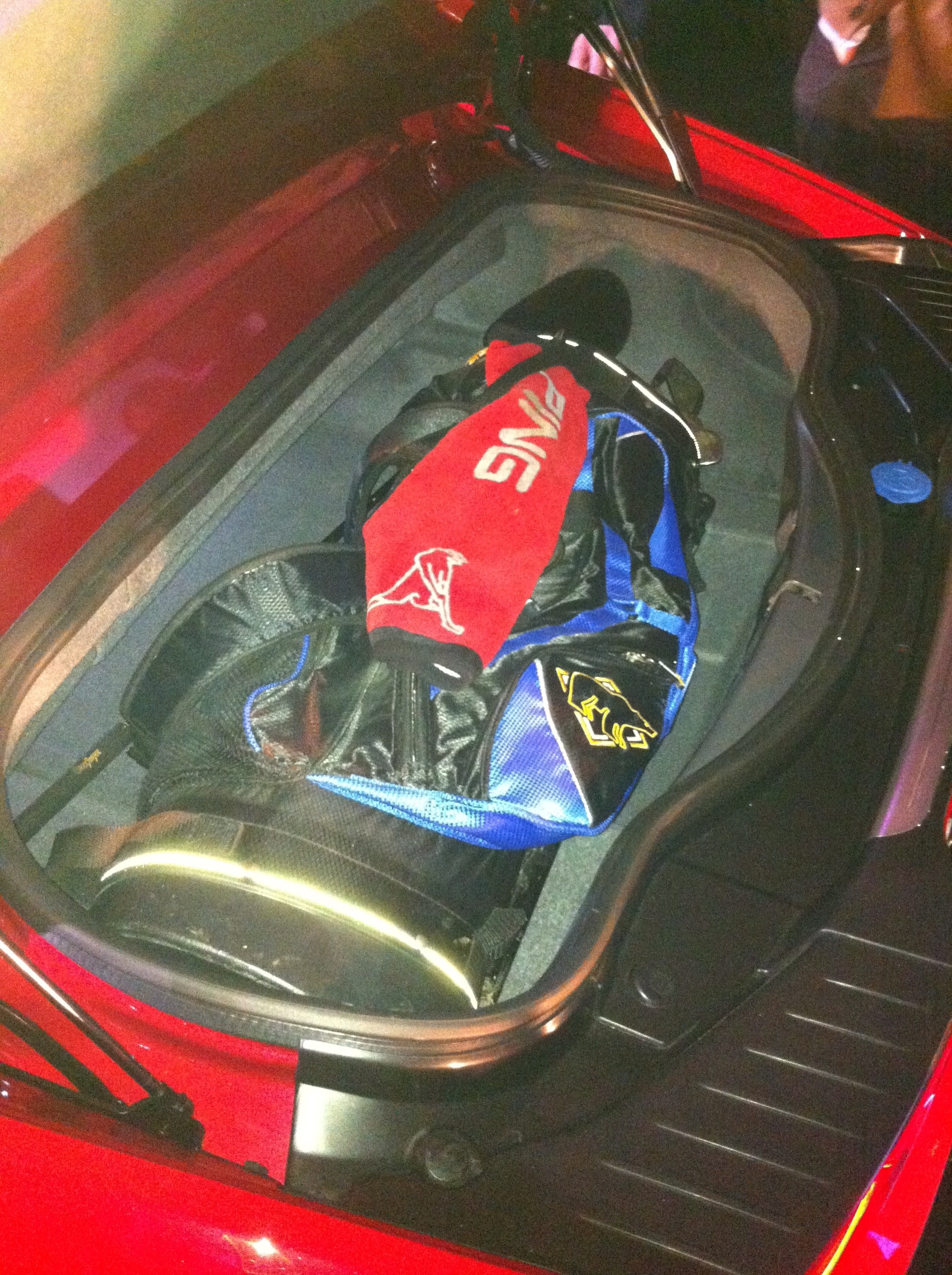
The three cars on show did look stunning though leaving each of their boots open to show they could take a bag of golf clubs perhaps demonstrated that they have not quite forgotten about their core customers!

20130302-172719.jpg

Lana Del Ray cooly warbles through the F type’s theme but that guy in front really is wearing a tank top

20130302-172911.jpg

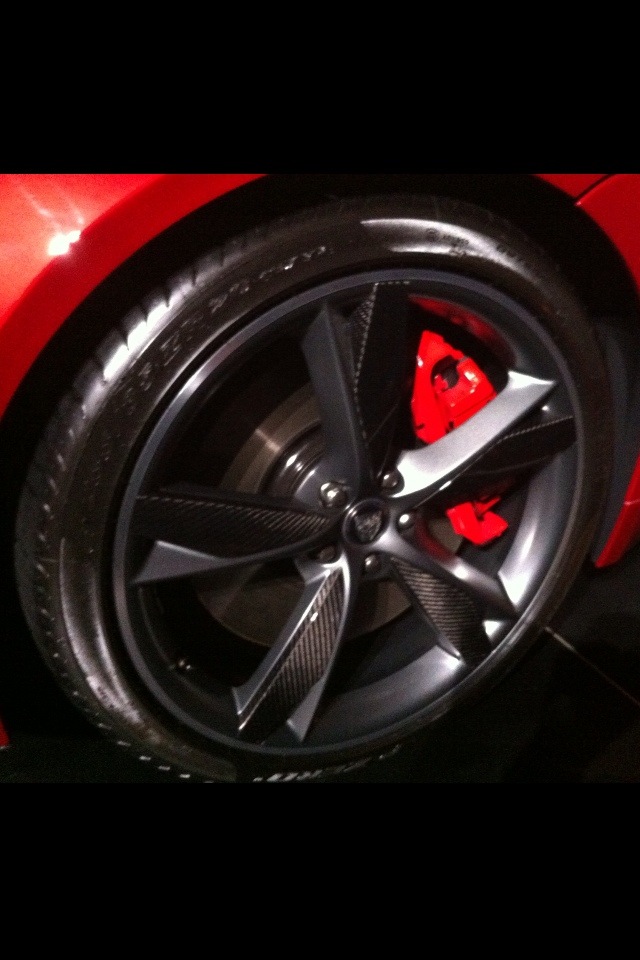
Nice carbon fibre detail on alloy wheels

20130302-172843.jpg

Even the old boys like the car..

20130302-172857.jpg

…maybe because they can be sure they can get their golf clubs in

I remember once entering my car in a Pride of Ownership at an MG show at Silverstone. I was assured a POO (as it was unfortunately known) was not as serious as a concourse d’elegance. However I turned up to find that others in my class had cleaned the inside of their bonnets with a toothbrush. I hadn’t even opened mine. So I abandoned the car and went to watch the racing. That was when my general aversion to the world of car polishers started. In my view it is far better to use your car as its maker intended – even if it gets a bit battered and dirty.

Lyon’s masterpiece..

It’s fair to say my cars are very rarely the best turned out in the paddock when I race. Of course one of the main problems is that I drive to venues and in summer that can mean a world of dead flies caked to the front. But at heart I would rather be tinkering with my tyres or engine rather than polishing the chrome. So I recently surprised myself by replying to an advert in Jaguar Driver looking for cars to go on display at Windsor Castle as part of the Inaugural Windsor Castle Concourse of Elegance (note the spelling – this is England you know) being held as part of the Queen’s Jubilee Celebrations.The cars invited to participate in the main Concourse were parked up in the Quadrangle of the Castle – a perfect setting. The Bentley and Jaguar Drivers clubs were invited to bring a car for each year of the Queen’s reign to be parked on Long Drive leading up to the Castle. I entered my wonderful Series 1 XJ12 and the old girl looked wonderfully patrician, on what was her own 40th jubilee, amongst the usual E types and Mk2 saloons.

Jaguar XJ12

I would like to say her shiny paintwork and detailed engine bay were the work of many hours of preparation. Well indeed they were – just not by me. I’m ashamed to say I paid someone else to do the work. Still, she looked good if not concourse. In fact I felt a definite pride in my ownership of her.

Others stirred by proprietary pride no doubt included the captains of industry, hedge fund millionaires and other plutocrats who owned the star cars up in the Castle. Whilst I prefer to see cars in motion, many of these stationary cars were indeed beautiful and it slowly dawned on me why people flock to Pebble Beach and Amelia Island. The most beautiful car in my mind was the 1931 Corsica bodied Daimler Double Six with a bonnet so long its radiator was practically in Hampshire. The most over the top (and frankly hideous) car was the one off  1925 Jonckheere Rolls Royce. Clever, wonderful attention to detail but undriveable with its long tail and appalling visibility.

RR Phantom Jonckheere Coupe

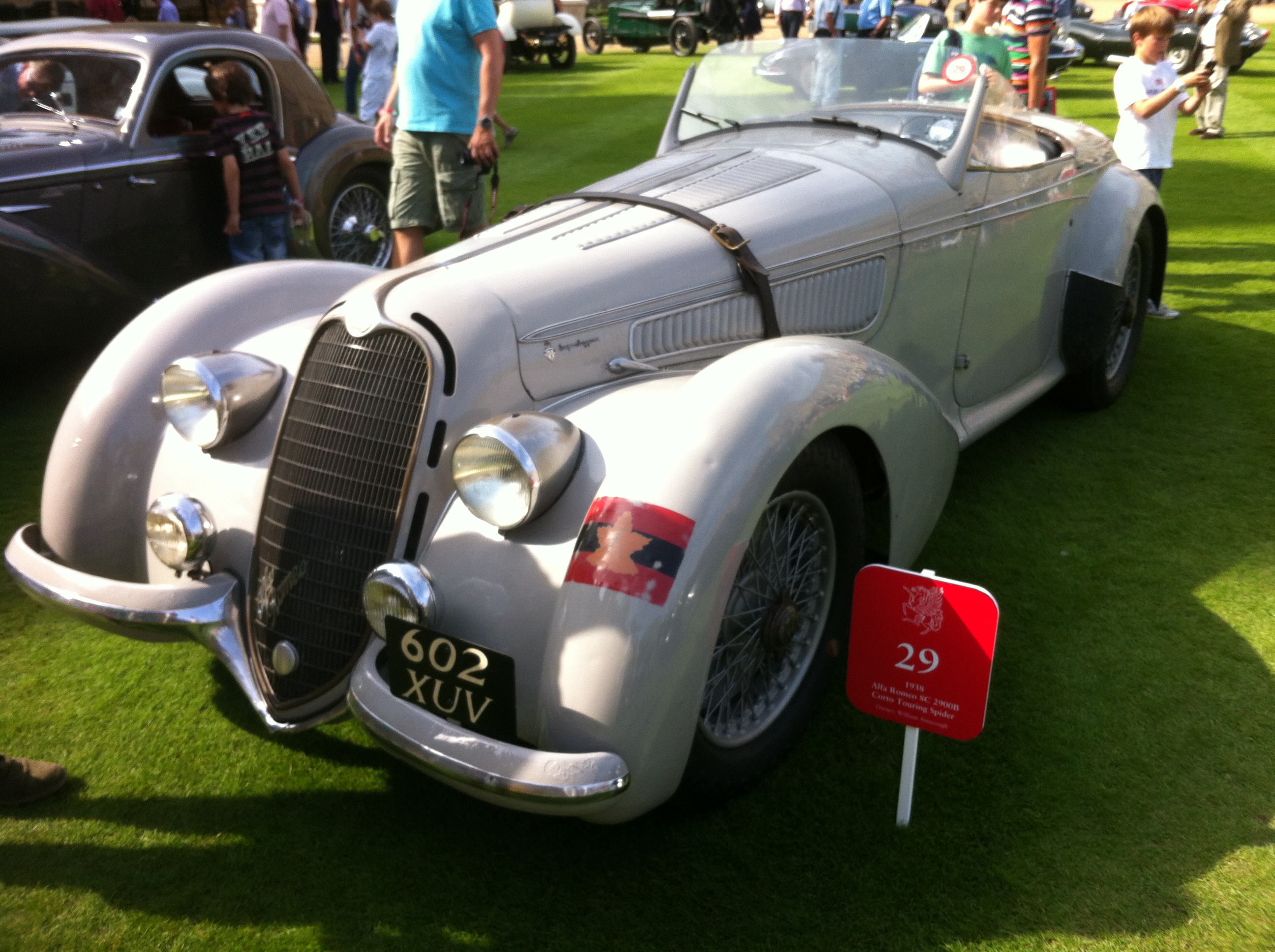
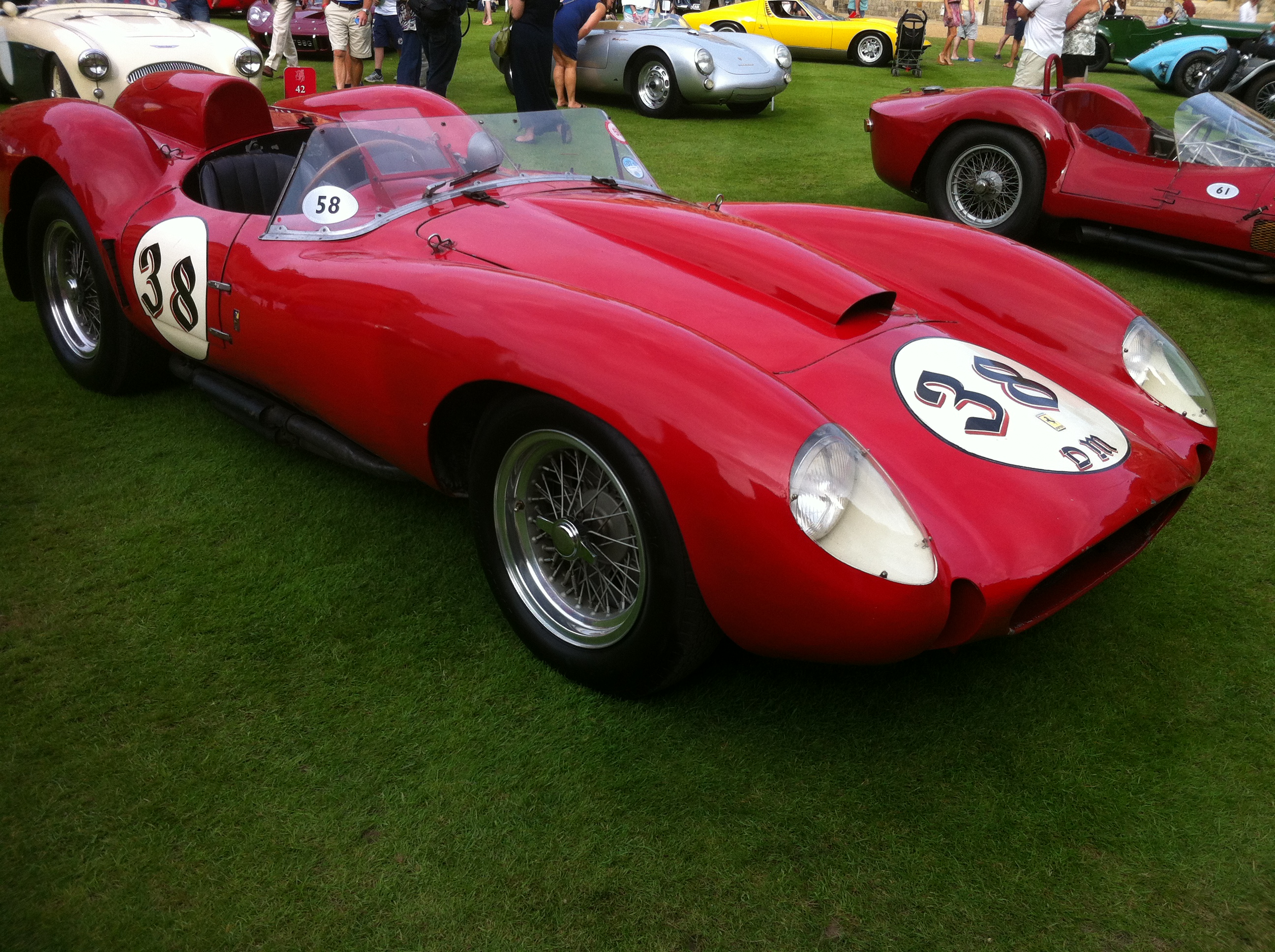
But the cars that caught the eye were those with patina. Two of the best were William Ainscough’s wonderful 1938 Alfa Romeo 8C, still resplendent in its original paint and Canadian Army (of occupation) formation insignia, and Nick Benwell’s faded yet glorious 1935  twin supercharged (gulp) Shelsley Frazer Nash. An interesting contrast was provided by two 1950’s Ferraris. The first, a heavily restored ex Fangio 290 MM Scaglietti Spider looked magnificent but also brand new. It could have been a replica. The second car, a 1957 Testarossa driven at various times by amongst others Collins, Hawthorn and Phil Hill was in paint decades old, still bore the number it last raced under and seemed to have beeb baptised in Castrol R. One was clearly a car for the polishers – the other for the drivers. I know which I preferred.

Even uglier from the front..

Star of the show for me – fabulous Corsica bodied Daimler Double Six

Alfa Romeo 8C

Ex Fangio Ferrari 290 MM

Testarossa!

Frazer Nash twin supercharged Shelsley

« Previous Page